



Русская версия: EN 388:2016 — руководство для импортёра
Every year we receive purchase orders from distributors in Russia, Kazakhstan, the UAE and Poland that start with the same sentence: “Our customer rejected the last container because the gloves did not match the EN 388 level on the label.” In most cases the factory did not cheat — the buyer simply compared two numbers that were measured in different ways. This guide explains what the five digits on a work glove really mean, which documents each market expects in 2026, and how to verify a supplier’s claim before you pay a deposit.
What the five digits actually measure
EN 388 is the European standard for protective gloves against mechanical risks. A rating such as 4121X is read position by position, and each position comes from a different physical test:
- 1st digit – abrasion (1–4): how many cycles a sandpaper wheel takes to wear through the material.
- 2nd digit – cut by blade (Coupe test) (1–5): resistance to a rotating circular blade. This test is unreliable on highly cut-resistant yarns, which is why the letter appears at position 5.
- 3rd digit – tear (1–4): force needed to tear a notched specimen.
- 4th digit – puncture (1–4): force needed to pierce the palm with a standard stylus.
- 5th position – T or letter A–F: if the glove was tested with the ISO 13997 straight-blade method, the result is reported as level A (weakest) to F (strongest), preceded by the letter T. Where you see X, that test was not performed or not applicable.
The practical consequence: a Coupe result of 5 does not equal level F. A glove showing 4X43C and a glove showing 4X42F can look identical on the shelf while offering very different protection against a sharp steel edge. If your customer handles sheet metal, glass or rebar, insist on the ISO 13997 letter, not the Coupe number.
| Position | Property | Range | What buyers should ask |
|---|---|---|---|
| 1 | Abrasion | 1–4 | 4 for leather palm gloves used daily |
| 2 | Cut (Coupe) | 1–5 | Only valid for thin liners, not HPPE yarns |
| 3 | Tear | 1–4 | 3–4 for leather and heavy coatings |
| 4 | Puncture | 1–4 | 3–4 for construction and recycling |
| 5 | Cut (ISO 13997) | A–F or X | The number that matters for metal and glass |
The documents each market expects in 2026
EN 388 only describes the test method. A complete shipment file usually needs three layers:
European Union
CE marking under Regulation (EU) 2016/425, with an EU type-examination certificate (Module B) and either Module C2 or Module D surveillance from a notified body for Category II and III gloves. The declaration of conformity must name the exact model, the notified body number and the standard version (EN 388:2016+A1:2018).
Russia, Kazakhstan, Armenia, Kyrgyzstan
An EAC certificate under TR CU 019/2011 (personal protective equipment). Customs will not release a PPE shipment on a CE certificate alone. For leather work gloves the file also needs the technical data sheet in Russian and the manufacturer’s test report; the certificate itself must be issued to the importer or to the manufacturer with a valid authorisation letter.
Middle East
Saudi Arabia requires SASO / SABER registration with a product certificate of conformity; the UAE generally accepts CE plus an ESMA-compliant label. Both markets inspect the label language, so plan Arabic and English labelling before production, not after arrival.
How to verify a factory’s claim in one week
Three cheap checks remove most of the risk:
- Ask for the test report, not the certificate. The report must show the model code, the laboratory’s accreditation number (ISO/IEC 17025), the test date and the level for each of the five positions. A certificate without a matching report is decoration.
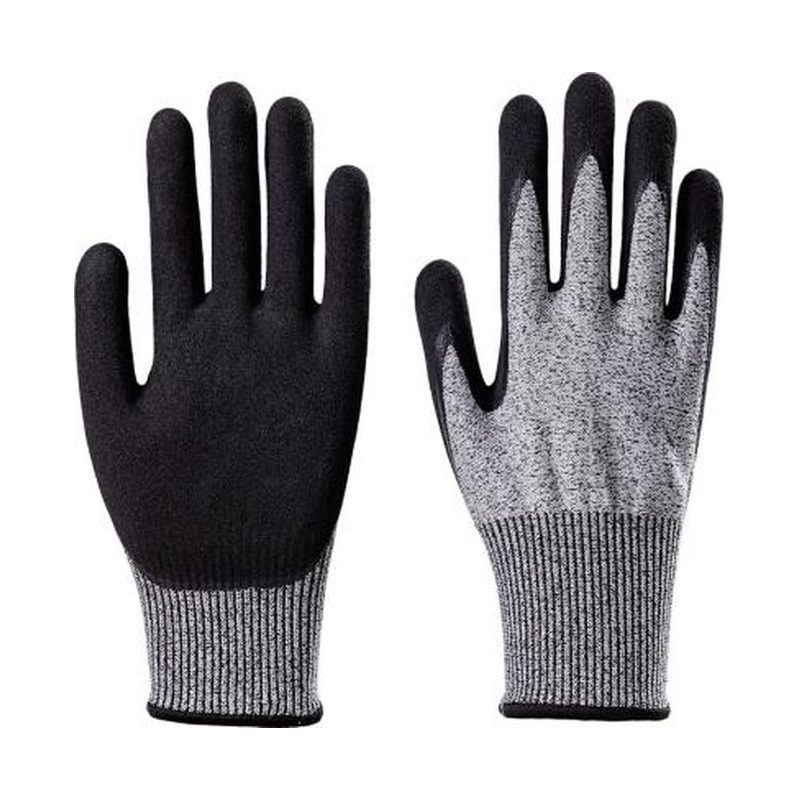
- Ask which layer carries the protection. A dipped glove with a 13-gauge HPPE liner and a sandy nitrile palm derives cut resistance from the liner and abrasion resistance from the coating; a leather welder derives both from the hide. Understanding this tells you whether a substitution of liner or hide changes the rating.
- Test a production sample, not a development sample. Ask for a pair cut from the actual bulk lot, with the lot number on the bag. Ratings drift when yarn supplier or hide thickness changes between sampling and mass production.
Mistakes we see most often in incoming inspections
1. Comparing Coupe results with ISO 13997 letters. A “cut level 5” glove can be a level C glove. Always convert to the letter scale before comparing two suppliers.
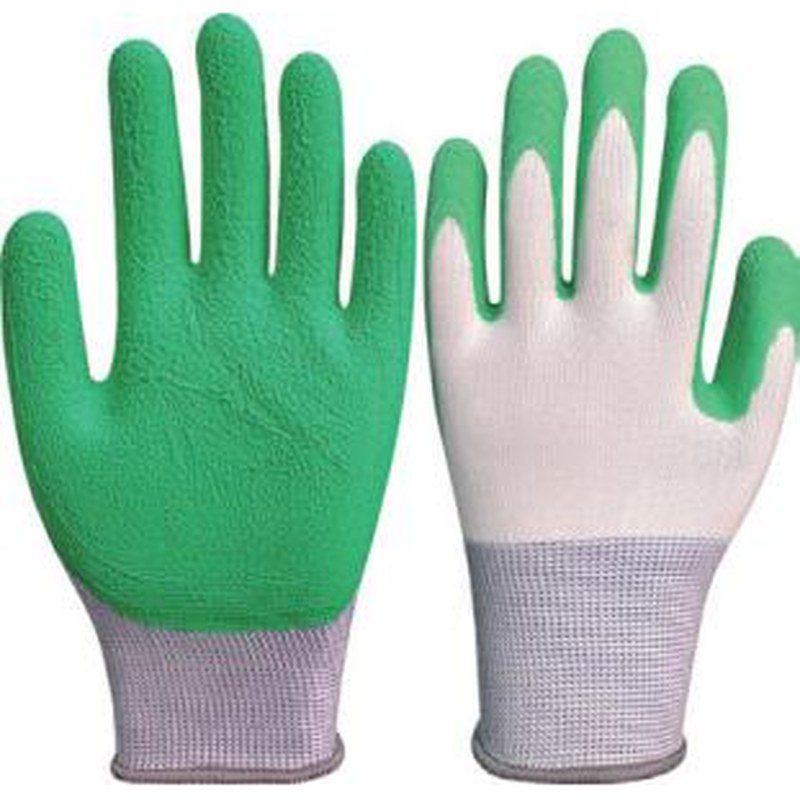
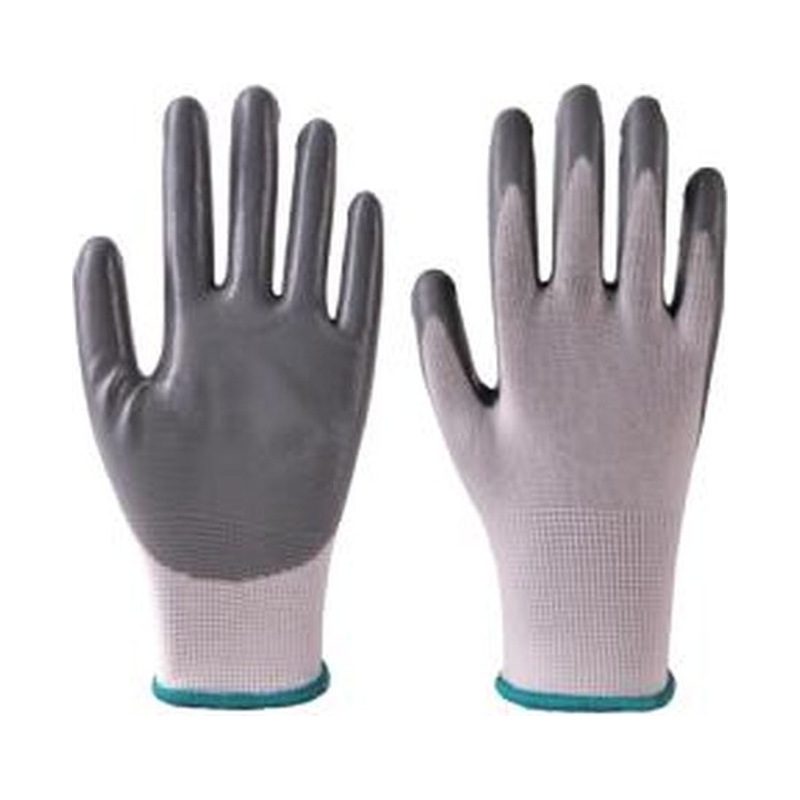
2. Ignoring the coating when checking abrasion. Nitrile and latex palms typically add one or two abrasion levels over the same liner; a smooth nitrile version and a sandy version of the same model can print different first digits.
3. Forgetting heat and cold. A welding glove is judged on EN 407 (contact heat, small splashes of molten metal) and a winter glove on EN 511 (cold, contact cold, water penetration). EN 388 alone tells you nothing about either.
4. Accepting a “similar model” certificate. The certificate is issued to a specific design. If the thumb pattern, palm thickness or seam changes, the certificate does not cover the new model.
Frequently asked questions
Is a higher EN 388 level always better? No. Level F liners are stiffer and less breathable; for assembly work a level C glove with better dexterity usually cuts injury rates more than a level F glove the operator refuses to wear.
Can one report cover several colours and sizes? Yes, if the construction is identical. Colour and size changes do not require new testing; a change of liner, hide thickness or coating does.
How long does certification take? For a model already tested, issuing an EAC certificate usually takes two to three weeks once the Russian data sheet is ready. New designs need samples on a notified body’s bench, which adds four to six weeks.
About our factory
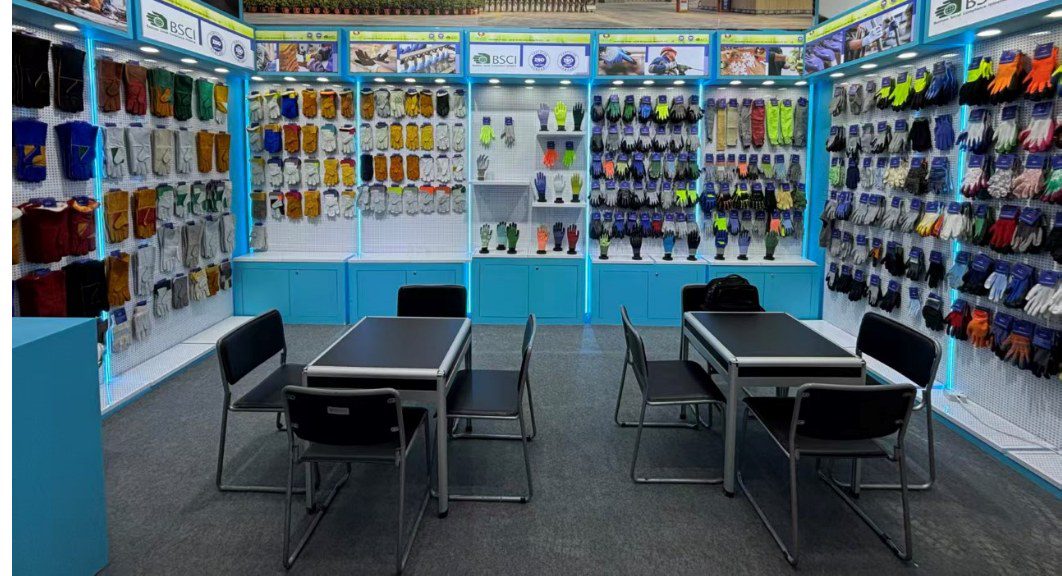
Baishun Safety manufactures welding, driver, working and coated gloves in Gaozhou, Guangdong. Every leather model is cut and sewn in our own workshop, long-cuff styles are stitched with fire-resistant thread and hidden seams, and each batch ships with its test report so the label and the paperwork match. We supply OEM and private-label orders from 500 pairs per style and can prepare CE, EAC and SASO files for your market.
Need a specification sheet and a quotation? Send your target protection level, size range and annual volume through our quote request form — we reply within 12 hours with a data sheet, a sample plan and FOB pricing.
Related reading: welding leather gloves, cut resistant gloves, cold resistant gloves.